The chapter of the Tijara Jain Temple begins on 16 August 1956, when excavation work in the town led to the recovery of a white marble idol of Chandraprabhu from beneath the ground. The discovery was guided by the account of Saraswati Devi, who, after a 3-day fast, saw the idol's location in a dream and had the site unearthed the following morning. The idol bore an inscription dating its original consecration to Vikram Samvat 1554, corresponding to approximately 1497 CE, confirming what many in the Jain community already believed: that Tijara had once been an ancient dehra, a sacred place of Jain idol worship, destroyed by invaders in an earlier century.
A second idol of Chandraprabhu was recovered from the temple premises in 1972. Within the complex, the Parshvanath shrine was already 250 years old when the main temple rose around it in 1956, proof that pilgrims had been drawn to this part of the Aravallis long before its modern founding.
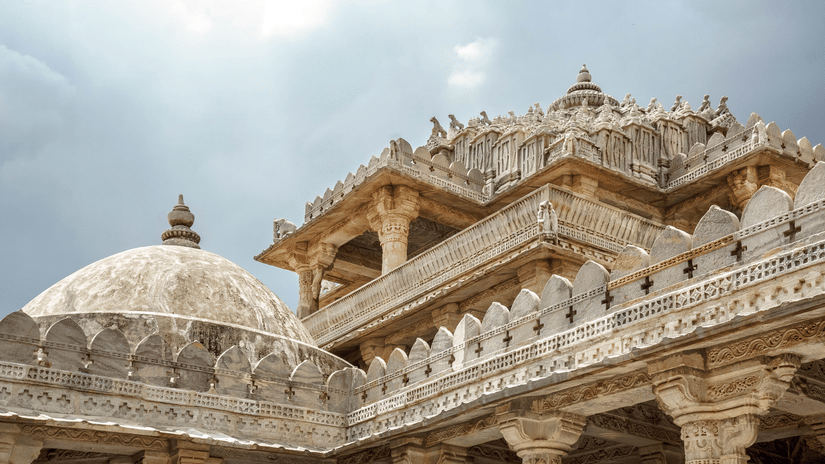
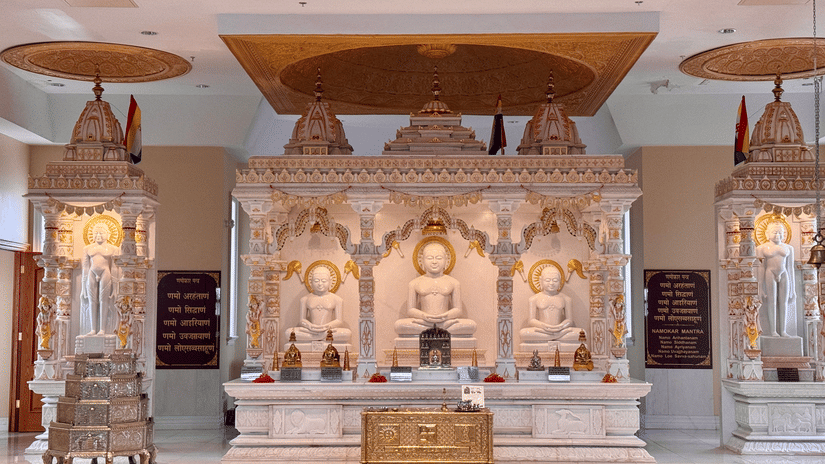
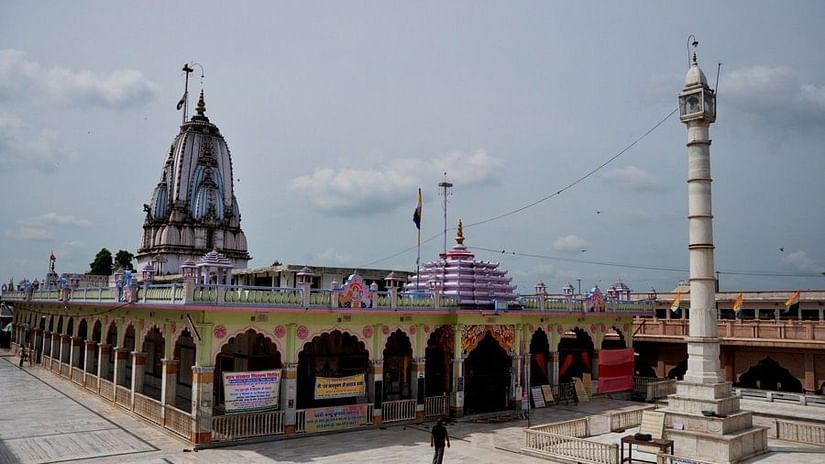
Just past the entrance stands a manastambha, a column raised in honour of the tirthankaras and usually the first thing every visitor photographs, the red sandstone and white marble around it blending Jain temple convention with the Indo-Islamic detailing common across Alwar's older buildings. Follow that same stonework inward, and it opens into the main hall, wide enough to seat more than 2,000 people at once, where mythological paintings and glass inlay work catch the morning light differently by the hour.
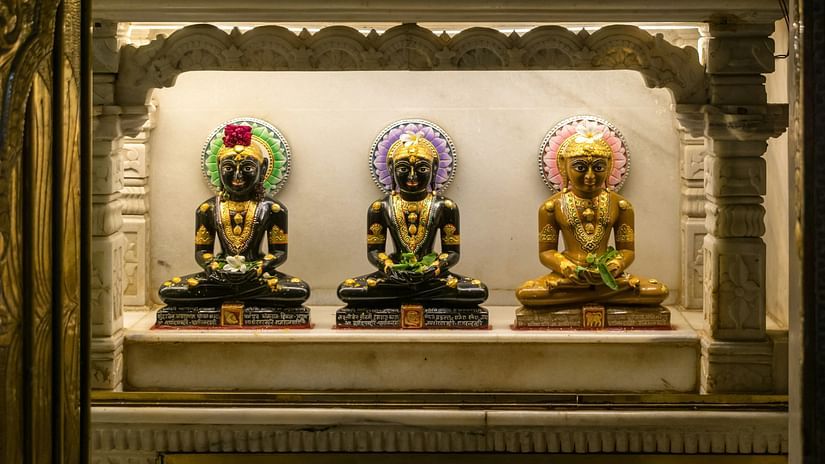
At the centre of it all sits the mulnayak, the principal idol: a 15-inch white marble figure of Chandraprabhu seated in the lotus position. The hall also houses idols of Bhagwan Parshvanath and Bhagwan Mahaveer, deepening the sacred character of the complex.
The Temple's Rituals and Festival Calendar
Each morning opens with Abhishek, the ritual bathing of the idol, and the early risers who come for it usually have the courtyard to themselves before the day fills it in. Beyond that daily rhythm, the devotional calendar builds toward 2 fixed points: Mahavir Jayanti, marking the birth of the last tirthankara, and Paryushan Parva, the annual period of fasting and reflection observed by Jain communities everywhere. Both occasions bring a noticeably larger crowd than an ordinary weekday, so if you would rather have the halls to yourself, plan around them rather than during them.
Visiting the Tijara Jain Temple: Timing and Entry Costs
Tijara Jain Temple keeps a single opening window rather than split morning and evening slots, which makes timing a visit straightforward.
Temple Hours: 7:00 AM - 5:00 PM, daily
Entry Fee: Free, though donations toward the complex's upkeep are welcome
Who Can Visit: All visitors, irrespective of caste, creed, or faith
Best Time of Day: Early morning, before the Abhishek ritual draws a larger crowd
From Delhi: Take NH 48 toward Bhiwadi, then follow SH 25 to Tijara. Total distance is approximately 110 km; allow 2 to 2.5 hours depending on traffic.
From Gurgaon: The route follows NH 48 toward Bhiwadi. Gurgaon sits closer to Tijara than Delhi on this highway, making it a practical starting point for NCR travellers.
From Alwar: The temple is approximately 54 km from Alwar city, a drive of around 1 to 1.5 hours. State buses and private taxis operate regularly between Alwar and Tijara.
From Jaipur: Travel to Alwar by road or rail, then continue to Tijara. Jaipur and Alwar are well connected on the Delhi-Jaipur road and rail corridor.
Nearest Railway Station to Tijara Jain Temple: Alwar Junction, approximately 55 km away, is the railway station most travellers use to reach the temple.
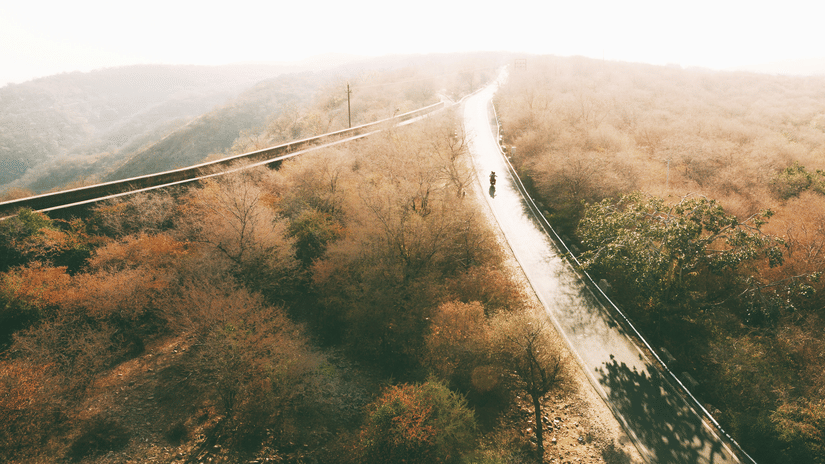
Pandupol Hanuman Temple: Set inside Sariska Tiger Reserve, this Pandupol Hanuman Temple shrine centres on a reclining Hanuman idol tied to a Mahabharata legend, with a 35 ft. waterfall nearby that peaks just after the monsoon.
Other Temples in Alwar: Neelkanth Mahadev, Bhartrihari, and Naldeshwar round out a wider circuit of temples in Alwar worth combining with your Tijara visit.
Sariska Tiger Reserve: Approximately 55 km from the temple, pair a wildlife drive here with both temple visits.
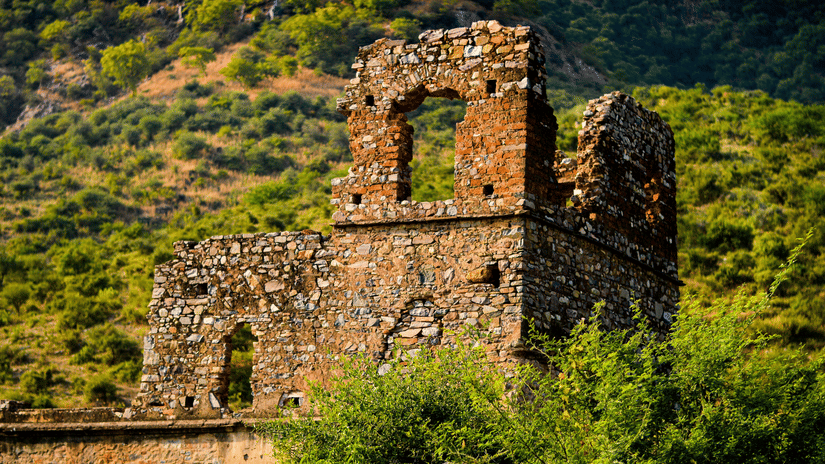
Bhangarh Fort: Widely reported as one of India's most “haunted” sites, this ruined fort is one of several places to visit near Tijara Fort-Palace worth adding on your way back.
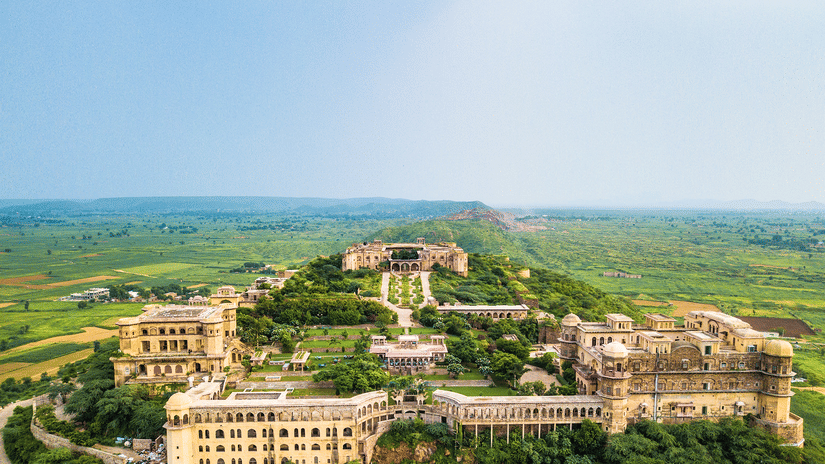
Spread across 8 acres, its Rajput-Afghan architecture unfolds through courtyards, terraces, pavilions, and 10 Hanging Gardens that cascade down the hillside. Looking out from its timeless walls and intricately carved jharokhas, one sees a landscape that seems to stretch endlessly—green fields below and the undulating Aravallis beyond.
The fort-palace houses 109 rooms and suites, each dedicated to one of India’s artists, aesthetes, designers. No two stays feel quite alike. A room in the Mardana Mahal may open into a huge garden courtyard while those on the upper floor offer either the sunrise or sunset across the Aravallis. With open-to-sky sitouts, the rooms at the Rani Mahal overlook the spectacular 100 ft. pool on one side and the Aravallis on the other. Many of the rooms at Khajur Mahal are designed around the landscape itself, with panoramic views of the Aravallis right from your cosy bed. Larger groups of friends and families often find themselves gathering in the more private Deewar Mahal or Tope Mahal wings, where the fort feels almost like a residence of their own.
After a morning exploring the Tijara Jain Temple, settle into an Ayurvedic therapy designed to ease tired muscles and quiet the mind. The luxury here lies in the cool countryside breeze, wholesome farm-to-table meals, and the joy of immersing yourself in the region’s centuries-old art and culture, all while staying in its charming vintage rooms.
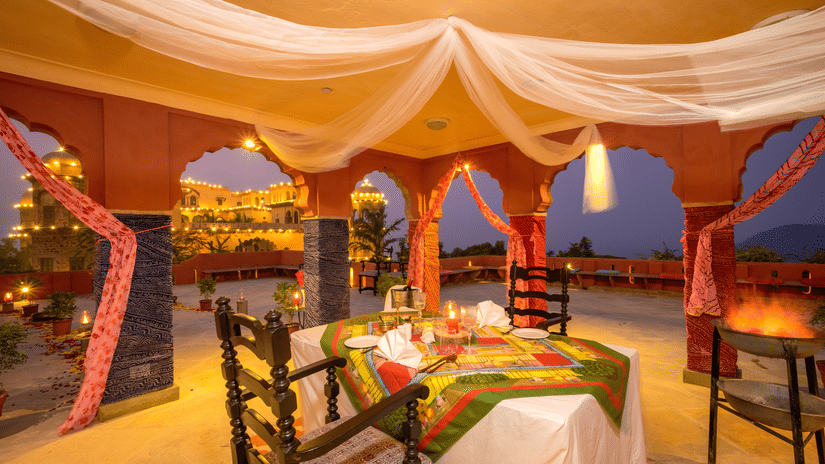
On Saturdays, the property comes alive with cultural performances as some of India’s leading artistes perform under the twilight. For couples who cherish celebrations in places still untouched by the crowds, Tijara’s Intimate Feast unfolds beneath a million stars. You may also ask the Neemrana team for a bumpy ride in your vintage car through bougainvillea-lined alleys, discovering the historical architecture of the property.